
Advantages of Textile Jet Spray Fabric Dyeing Technology:
- Faster dyeing times: Textile jet spray fabric dyeing technology can dye fabrics much faster than traditional dyeing methods. The high-pressure water jets allow for rapid dye application, significantly reducing the time it takes to dye fabrics.
- Reduced water consumption: Textile jet spray fabric dyeing technology uses less water than traditional dyeing methods. The high-pressure water jets allow for better penetration of the dye into the fabric fibers, reducing the amount of water needed to dye fabrics.
- Reduced chemical use: Textile jet spray fabric dyeing technology eliminates the need for toxic chemicals, making it a more environmentally friendly option for textile manufacturers.
- Consistent color application: Textile jet spray fabric dyeing technology uses computer-controlled nozzles to ensure that the same amount of dye is applied to each part of the fabric, resulting in a uniform color that is free of splotches or uneven dyeing.
- Reduced production costs: Textile jet spray fabric dyeing technology reduces production costs by reducing water and chemical consumption, as well as by increasing production efficiency through faster dyeing times.
Working Principles of Textile Jet Spray Fabric Dyeing Technology:
Textile jet spray fabric dyeing technology works by using high-pressure water jets to apply specially formulated dyes to fabrics. The process begins by loading the fabric into a dyeing machine equipped with a series of nozzles. The fabric is then transported through the machine using a conveyor belt while high-pressure water jets spray the dye onto the fabric’s surface.
The high-pressure water jets create a turbulent flow, which helps the dye penetrate deep into the fabric fibers. This results in vibrant and long-lasting colors that are evenly distributed throughout the fabric.
Bernoulli’s principle plays a significant role in textile jet spray fabric dyeing technology, as it describes the relationship between the speed of a fluid and the pressure it exerts. According to Bernoulli’s principle, as the speed of a fluid increases, the pressure it exerts decreases. In the case of textile jet spray fabric dyeing technology, the high-pressure water jets create a turbulent flow, which increases the speed of the fluid and decreases the pressure it exerts. This allows the dye to penetrate deeper into the fabric fibers, resulting in more even and vibrant colors.
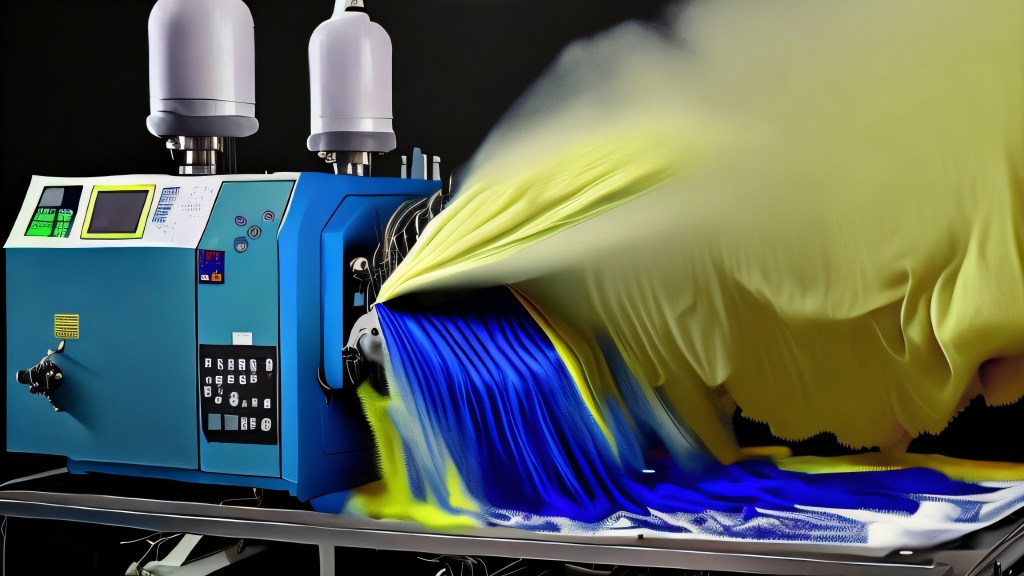
Jet Spray Dyeing
In Conclusion:
Textile jet spray fabric dyeing technology is a fast, efficient, and eco-friendly way to dye fabrics. It offers a range of advantages over traditional dyeing methods, including faster dyeing times, reduced water and chemical consumption, consistent color application, and lower production costs. While the working principles of this technology may involve complex scientific concepts, they can be explained in simpler terms to make the topic more accessible and understandable. Overall, textile jet spray fabric dyeing technology represents a promising innovation in the field of textile manufacturing and offers exciting possibilities for the future of sustainable and efficient fabric production
 Site Title
Leave a comment